God Centered Perspective: Dependent. There comes a point in our lives, God willing, when we begin to realize that we can’t fix ourselves, those around us or the world that we live in. The rage, bitterness, insatiable desire to achieve, need for the approval of others, pretending, coveting, idolizing or hopelessness that follows us around is something that we cannot fix on our own. This brokenness follows us from relationship to relationship, job to job, season to season and place to place. Hopefully there comes a point at which we recognize that we don’t posses the power to fix ourselves and realize that our primary problem is not outside of us, but is inside of us. A quick trip to the bookstore will demonstrate humanity’s obsession with fixing our broken psyches and attempting to make ourselves “whole” – the largest section is entitled “self help.” To be fair, a large portion of modern Christian books are nothing more than “Christianized” versions that one can find in the “self help” section of any other book store. How many times have we resolved to stop a certain behavior, banish sinful thoughts or terminate dangerous relationships only to find ourselves doing the same things that we don’t want to do.1 Our best resolutions, discipline and white knuckled effort yields very little progress toward true, ongoing change in our lives. We must recognize that we are powerless to effect true ongoing change apart from God’s intervention; we are utterly dependent upon God.
We don’t like being dependent – Adam & Eve certainly didn’t. Every sin that we battle has, at its root, the sin of autonomous self rule.2 We have to answer the same question that Adam & Eve had to answer in the garden – upon whom will I truly trust and depend? They chose themselves, and we normally do too. We don’t like being told what to do and what not to do, but even worse than being told what to do and what not to do is realizing that we don’t have the ability to adhere to these requirements.3 This is why God gave us His law – to show us what He requires, that we can never measure up and to push us to depend upon Him & His grace.
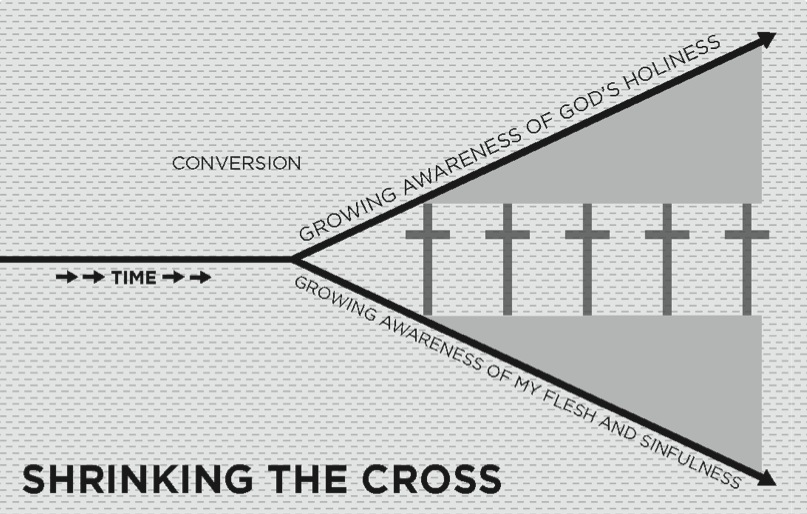
We must get to a point where we understand, at a deep level, that we were indeed objects of wrath.4 Wrath is not a popular concept to discuss, but an understanding of it is central to the Christian’s maturity and joy. Most of us have such a low view of God that we tend to perform in an attempt to earn His favor and an overly inflated view of ourselves that we don’t think that we’re really all that bad which leads to pretending we have it all together despite knowing that we don’t.5 Until you feel the weight of your offense toward the Creator of the cosmos, you will never see a need to live dependently; you will think that you can handle most things on your own. Jerry Bridges summarizes this well, “we can’t begin to appreciate the good news of the gospel until we see our deep need. Most people, even believers, have never given much thought to how desperate our condition is outside of Christ. Few ever think about the dreadful implications of being under the wrath of God. And none of us even begins to realize how truly sinful we are.”6 The deeper our understanding of the massive gap between God’s holiness and our depravity, the more dependently we will walk; the byproduct of this is true humility and a walk that is refreshingly absent of any sort of self righteous swagger.
Jesus’ first point in the sermon on the mount was “blessed are the poor in spirit, for theirs is the kingdom of heaven.”7 Jesus, in one of His earliest sermons, says that we are profoundly fortunate to be aware of our spiritual inability – to recognize that we are spiritually bankrupt before God is a good thing. There are two types of bankruptcy in the United States: chapter 7 & chapter 11. Chapter 7 bankruptcy is for companies who have no hope of restructuring, reorganizing or surviving; it is permanent. Chapter 11 is for companies that need assistance in working through their financial problems and given some time and effort can get their books in order, restructure their debt and emerge from bankruptcy to stand on their own; this is temporary bankruptcy. The question is, “what type of spiritual bankruptcy did you file?” Permanent or Temporary. The church at Galatia had filed chapter 11 and were now trying hard to emerge from their dependent posture, attempting to prove their worth and ability – to stand on their own. The bible says that it is not at our worst when we are most offensive to God, but when we are at our very best.8 The currency of our good works is worthless before the Creator; we enter in to the kingdom based solely on the work of Another and we never “pay our own way” with our good works; we were dependent upon the grace of God for salvation and just as dependent today as we were the day we accepted Christ’s sacrifice for our sin. We add nothing to the finished work of Christ.
Utter dependence upon Christ is not merely our initial posture when we are saved, it is our ongoing posture in relationship with God. We are justified by dependent grace and are sustained by this same dependent grace.9 We, sometimes, think that we needed Jesus to get our act together, but now it is time to roll up our sleeves and pull our own weight (though few would actually say this). The book of Galatians addresses this very problem, Paul asks who had bewitched the young church in Galatia10 and said that anyone who added to the sufficiency of the gospel by adding works to it was accursed.11 The church had departed from dependent faith based in grace alone and had embraced a works based righteousness rooted in adherence to the Jewish law. We are acceptable (righteous) before God based on the perfect life that Jesus lived and gave to us, period.12 Our own efforts to obey and follow God do not make us more acceptable to Him. There is nothing left to earn, Jesus earned it all for us; the writer of Hebrews tells us that the alter is closed, no other sacrifice is required.13 Though we’d never say it, we often times believe that we needed Jesus to get into His kingdom, but then it is up to our own self-disciplined effort to effect change and transformation in our lives. We look to ourselves, adherence to rules and formulas for ultimate deliverance instead of the Deliverer; these amount to nothing more than self salvation projects. When we operate in this mindset, we become glory thieves because the focus is on us and our contribution to any change that we experience. However, when we realize that we are completely dependent upon God for transformation14, He is the one that is glorified by the transformation that happens in our lives. We never grow out of our dependence: “Mephibosheth never got over his crippled condition. He never got to the place where he could leave the king’s table and make it on his own. And neither do we.”15
We bring nothing to the table in our negotiation with God except for our sin that makes our salvation necessary. There is no room for our morality when coming before God – “for by works of the law no human being will be justified in his sight, since through the law comes knowledge of sin.”16 We, often times, believe that we bring all of our best efforts to God and Jesus‘ sacrifice makes up the difference between our morality and God’s perfect standard. This is heretical thinking!17 We were dead, unable to please God and even our morally good & righteous deeds are like filthy rags before God.18 It is not as if God determined before He created the world that we’d be pretty clean and He’d make up the difference – no! We were objects of His wrath, spiritually bankrupt and utterly dependent upon Him to intercede on our behalf and make our dead hearts alive! We never depart from this desperate dependent state.
But, surely we can do some good things on our own, we aren’t dependent for everything good. Jesus attacks this thinking by saying, “I am the vine; you are the branches. If a man remains in me and I in him, he will bear much fruit; apart from me you can do nothing.”19 Righteousness does not come from obedience, righteousness comes from faith which leads to obedience. They may look the same on the outside, but the innards are worlds apart!20 Abraham believed (trusted/depended on) God and it was credited to him as righteousness. Our obedience earns us nothing before God. Abraham was a far cry from righteous on His own, but because He depended upon God, he was viewed as righteous.21 “Faith is believing in and relying upon God. It is “not a work, but a relinquishment of all work, an unqualified trust in God who gives life to the dead (Rom. 4:17), who raised Christ from the dead (4:24), who in Christ gave ‘a righteousness from God.’”22 Martin Luther, in his commentary on Galatians said, “there is no middle ground between Christian righteousness and works-righteousness. There is no other alternative to Christian righteousness but works-righteousness; if you do not build your confidence on the work of Christ, you must build your confidence on your own work. On this truth and only on this truth the church is built and has its being.”23 Many set out to earn God’s approval or prove that they are worthy of it. You aren’t and you don’t have to.
Jesus addressed our propensity toward self righteousness in Luke 18: “he also told this parable to some who trusted in themselves that they were righteous, and treated others with contempt: “Two men went up into the temple to pray, one a Pharisee and the other a tax collector. The Pharisee, standing by himself, prayed thus: ‘God, I thank you that I am not like other men, extortioners, unjust, adulterers, or even like this tax collector. I fast twice a week; I give tithes of all that I get.’ But the tax collector, standing far off, would not even lift up his eyes to heaven, but beat his breast, saying, ‘God, be merciful to me, a sinner!’ I tell you, this man went down to his house justified, rather than the other. For everyone who exalts himself will be humbled, but the one who humbles himself will be exalted.”24 When we are proud of our moral cleanness, disciplined efforts and good works, we show that we are at odds with the Gospel. Those who are proud of their ability to manage their behavior treat others with contempt. When we approach God attempting to impress Him or earn His approval and affection, He sees our most righteous acts as nothing more than a pile of filthy rage in His presence. The Gospel, however, beckons those who recognize their complete inadequacy and long to lean upon Another. As Christians, we should view ourselves as nothing more than beggars showing other beggars where to find bread.
The spectacularly good news is that Jesus not only forgave you of your sins so that you could enjoy eternal life, but He also lived a perfect life on your behalf because you couldn’t. This means that you are approved, accepted and loved despite your own performance and that you have nothing to offer God to win His favor! The warmth of God that is displayed toward Jesus when He said, “this is my beloved son, with whom I’m well pleased,”25 is the same warmth that He extends toward us. If you will assume a dependent posture, then you will walk more freely than ever before. You can stop striving and start depending upon the finished work of Christ on your behalf. Faith makes us righteous, not adherence to the Law. Our joyful works are a byproduct of faith. One is damning & burdensome, the other is liberating and profitable!26 May we all have the same zeal as Paul had when he abandoned all of his accomplishments and boasted only in the cross of Christ. We don’t merit additional affection and approval from the Almighty by our obedience.27 The question is, “are we willing to rely on God’s grace and mercy alone instead of our performance, to boast in nothing except the cross? If so, we can bask every day in the grace of God. And in the joy and confidence of that grace we can vigorously pursue holiness.”28 We must rest in the finished work of Jesus as the only acceptable sacrifice that is pleasing to God. When we understand this, we begin to move from behavioral modification to heart level transformation and everything changes.
Prayer: Lord, please help us to remember that we are utterly dependent upon you. Let us not stray from this place and begin to trust in ourselves or our systems instead of you.
Notes:
1 Paul articulated this struggle in Romans 7 when he says “For I have the desire to do what is right, but not the ability to carry it out. For I do not do the good I want, but the evil I do not want is what I keep on doing.” (Romans 7:18–19 ESV). All Christians wrestle with this, but Paul ends chapter 7 with resolution and hope: “wretched man that I am! Who will deliver me from this body of death? Thanks be to God through Jesus Christ our Lord!” (Romans 7:24–25 ESV); for Paul, the living presence of the risen savior was the answer to his battle with sin.
2 Adam & Eve abandoned a life of dependency upon God for one of autonomous self rule. They chose to disobey because they wanted to be the director of their own lives. See Genesis 3. Every sin that we battle with has, at its root, unbelief in God’s promises and goodness and our desire to be autonomous. See Battling Unbelief by John Piper for more information.
3 We don’t like law, but we like grace even less. As much as we are naturally disobedient to the laws that God has given to us and the ones that He has written upon our hearts, we tend to feel like we have some degree of control when we are successful in obeying these laws to some degree. Grace, however, derails our glory train and tells us that we can’t obey well enough and that we must completely trust in the obedience of Someone else.
4 “were by nature children of wrath, like the rest of mankind.” (Ephesians 2:3 ESV)
5 “If we are not resting in Jesus’ righteousness, this growing awareness of our sin becomes a crushing weight. We buckle under its load and compensate by pretending that we’re better than we really are. Pretending can take many forms: dishonesty (“I’m not that bad”), comparison (“I’m not as bad as those people”), excuse making (“I’m not really that way”), and false righteousness (“Here are all the good things I’ve done”). Because we don’t want to admit how sinful we really are, we spin the truth in our favor.”
“If we are not rooted in God’s acceptance of us through Jesus, we compensate by trying to earn God’s approval through our performance. We live life on a treadmill, trying to gain God’s favor by living up to his expectations (or our mistaken view of them).” https://thegospelcenteredlife.com/2012/02/28/shrinking-the-cross/
6 Gerald Bridges;Jerry Bridges. Holiness Day by Day: Transformational Thoughts for Your Spiritual Journey Devotional (p. 15). Kindle Edition.
7 Matthew 5:3 ESV. “In Matthew 5-7, Jesus wants us to see that regardless of how well we think we’re doing or how much better we’re becoming, when “You therefore must be perfect, as your heavenly Father is perfect” becomes the requirement and not “look how much I’ve grown over the years”, we begin to realize that we don’t have a leg to lean on when it comes to answering the question, “How can I stand righteous before God”? Our transformation, our purity, our growth in godliness, our moral advances and spiritual successes–Spirit-animated as it all may be–simply falls short of the sinlessness God demands. And since a “not guilty verdict” depends on sinlessness, assurance is ultimately contingent on perfection, not progress.” Where Can I Find Assurance? by Tullian Tchividjian
8 Relying on our good works to earn us anything of merit before God is offensive to God. See Isaiah 64:6 & Philippians 3:7-11.
9 “for all have sinned and fall short of the glory of God, and are justified by his grace as a gift, through the redemption that is in Christ Jesus,” (Romans 3:23–24 ESV); “Through him we have also obtained access by faith into this grace in which we stand, and we rejoice in hope of the glory of God.” (Romans 5:2 ESV)
10 “You foolish Galatians! Who has bewitched you? Before your very eyes Jesus Christ was clearly portrayed as crucified. I would like to learn just one thing from you: Did you receive the Spirit by observing the law, or by believing what you heard? Are you so foolish? After beginning with the Spirit, are you now trying to attain your goal by human effort?” (Galatians 3:1–3 NIV)
11 “But even if we or an angel from heaven should preach to you a gospel contrary to the one we preached to you, let him be accursed. As we have said before, so now I say again: If anyone is preaching to you a gospel contrary to the one you received, let him be accursed. For I would have you know, brothers, that the gospel that was preached by me is not man’s gospel.” (Galatians 1:8–9, 11 ESV)
12 Paul jettisoned all of his hard fought obedience and accomplishments and viewed them as worthless. He found that he was righteous before God not because of what he had accomplished or how well he obeyed, but by faith in Jesus’ perfectly lived life on his behalf. God “imputes” (gives) Christ’s perfectly obedient life to the person who depends upon God for salvation. When God views the believer, He sees the sinless perfection (righteousness) that Jesus earned for us. “Indeed, I count everything as loss because of the surpassing worth of knowing Christ Jesus my Lord. For his sake I have suffered the loss of all things and count them as rubbish, in order that I may gain Christ and be found in him, not having a righteousness of my own that comes from the law, but that which comes through faith in Christ, the righteousness from God that depends on faith” (Philippians 3:8–9 ESV)
13 This is one of the common themes in the book of Hebrews, especially in chapters 9 & 10. The author summarizes this in 10:12-14 “But when Christ had offered for all time a single sacrifice for sins, he sat down at the right hand of God, waiting from that time until his enemies should be made a footstool for his feet. For by a single offering he has perfected for all time those who are being sanctified.” (Hebrews 10:12–14 ESV)
14 “And I am sure of this, that he who began a good work in you will bring it to completion at the day of Jesus Christ.” (Philippians 1:6 ESV). All spiritual progress is rooted in who God is, what He has done and what He has promised to do.
15 Gerald Bridges;Jerry Bridges. Holiness Day by Day: Transformational Thoughts for Your Spiritual Journey Devotional (p. 28). Kindle Edition. The story of Mephibosheth is told in 2 Samuel 9 and is a poignant picture of our acceptance based upon another, Mephibosheth couldn’t earn his way and neither can we.
16 Romans 3:20 ESV
17 Q: But why cannot our good works be the whole, or part of our righteousness before God?
A: Because, that the righteousness, which can be approved of before the tribunal of God, must be absolutely perfect,1 and in all respects conformable to the divine law; and also, that our best works in this life are all imperfect and defiled with sin.b
________________________
a “For all who rely on works of the law are under a curse; for it is written, “Cursed be everyone who does not abide by all things written in the Book of the Law, and do them.”” (Galatians 3:10 ESV); ““‘Cursed be anyone who does not confirm the words of this law by doing them.’ And all the people shall say, ‘Amen.’” (Deuteronomy 27:26 ESV)
b “We have all become like one who is unclean, and all our righteous deeds are like a polluted garment.” (Isaiah 64:6 ESV)
The Heidelberg Catechism (#62)
18 God counts nothing that we do under our own power as good. Even our most ardent striving at obedience and moral goodness still has stains of sin in them. “All of us have become like one who is unclean, and all our righteous acts are like filthy rags; we all shrivel up like a leaf, and like the wind our sins sweep us away.” (Isaiah 64:6 NIV); “I will declare your righteousness and your deeds, but they will not profit you.” (Isaiah 57:12 ESV)
19 John 15:5 NIV
20 Righteousness in the old testament was not achieved through obedience, but through faith (Genesis 15:6; Romans 4:3, 22; Galatians 3:6; James 2:23). Ultimately, everybody’s righteousness (due to their faith) is accomplished by Christ’s perfect fulfillment of the law. Our obedience is never a director of God’s favor; it is a reflection that we have already received God’s favor – their is a huge difference. See Isaiah 58:1-5 & comment at http://wp.me/p1GPj4-in
21 God called Abraham in 12:1-9; in the following verses, Abraham tells the Egyptians that Sarai was his sister (12:10-20) in order to save his own skin! He again repeats this pattern in Genesis 20 with Abimelech. This occurred after Abraham believed God and it was credited to him as righteousness (Genesis 15:6); in Genesis 16, Abraham demonstrates a lack of obedience by attempting to fulfill the promise of God on his own by having a child with Hagai. The bible is full of examples of men and women who fall woefully short on their own, but have faith that God will deliver and provide a way. Let us never lean on our own obedience as a means to make us righteous.
22 Hedges, Brian G.; Donald S. Whitney (2010-12-01). Christ Formed in You (Kindle Locations 1094-1097). Shepherd Press. Kindle Edition.
23 Martin Luther Commentary on Galatians
24 Luke 18:9–14 ESV
25 Matthew 3:17, 17:5; Mark 9:7; Luke 9:35
26 Isaiah 64:1-7
27 “For we are the circumcision, who worship by the Spirit of God and glory in Christ Jesus and put no confidence in the flesh— though I myself have reason for confidence in the flesh also. If anyone else thinks he has reason for confidence in the flesh, I have more: circumcised on the eighth day, of the people of Israel, of the tribe of Benjamin, a Hebrew of Hebrews; as to the law, a Pharisee; as to zeal, a persecutor of the church; as to righteousness under the law, blameless. But whatever gain I had, I counted as loss for the sake of Christ. Indeed, I count everything as loss because of the surpassing worth of knowing Christ Jesus my Lord. For his sake I have suffered the loss of all things and count them as rubbish, in order that I may gain Christ and be found in him, not having a righteousness of my own that comes from the law, but that which comes through faith in Christ, the righteousness from God that depends on faith— that I may know him and the power of his resurrection, and may share his sufferings, becoming like him in his death, that by any means possible I may attain the resurrection from the dead.” (Philippians 3:3–11 ESV); “But far be it from me to boast except in the cross of our Lord Jesus Christ, by which the world has been crucified to me, and I to the world.” (Galatians 6:14 ESV)
28 Gerald Bridges;Jerry Bridges. Holiness Day by Day: Transformational Thoughts for Your Spiritual Journey Devotional (p. 29). Kindle Edition.
Download PDF
Previous Section
Next Section

 The Gospel Centered Life