
“Amiable agnostics will talk cheerfully about ‘man’s search for God.’ To me, as I then was, they might as well have talked about the mouse’s search for the cat.” –Surprised by Joy by C.S. Lewis
Category Archives: Gospel Centrality
What is an Idol?
God’s people had no influence over their neighbors in spreading the glory of God because their lives were saturated with the same practices and allegiances as their neighbors were. Instead of their hearts and lives being set apart, they were set on the same things as their neighbors. The had mixed the religious rites and practices in with theirs; “their land is filled with idols; they bow down to the work of their hands, to what their own fingers have made.” (Isaiah 2:8 ESV)
What is an idol? An idol is not necessarily a statue that we bow to in worship. An idol is anything that we ascribe ultimate allegiance to. It is the thing that we feel like we must have in order for life to work. Often times, idols are good things that we have turned in to God things. Things like children, financial success, athletics, marriage, hard work, friends & relationships. This is not a new problem, the Hebrews wrestled with it and many of us do today. Paul summarizes our propensity for preferring created things over the Creator of all things like this, “they exchanged the truth about God for a lie and worshiped and served the creature rather than the Creator, who is blessed forever!” (Romans 1:25 ESV). What are you worshiping as ultimate? Really?
What is the Gospel?
What is the Gospel?
“For what I received I passed on to you as of first importance: that Christ died for our sins according to the Scriptures, that he was buried, that he was raised on the third day according to the Scriptures” (1 Corinthians 15:3–4 NIV)
Theology Refresh: Sanctification
Desiring God is doing a series of brief interviews with various teachers called “Theology Refresh.” John Piper just did two on sanctification.
Part 1 covers sanctification in general. The progressive nature of becoming more like Jesus, being made more in to His image, becoming more holy in practice.
Listen now or download
Part 2 covers how sanctification works “on the ground;” how it happens in the real world and what role does the gospel plays in our sanctification. Listen now or download
Prayers & Principles Outline
Prayers & Principles
Purpose. To build a culture that is God glorifying, Christ centered, gospel (grace) saturated and redeeming to those that are a part of it; a culture that is marked by people in authentic pursuit of Jesus to know Him more deeply and serve Him more fully; people that are intentional about having their heart’s affections stirred up for the Lord. The fabric of this culture has some common threads that are woven in to it and help to create a worldview through which we see life and engage others as we chase after Christ.
Background Assumptions. God created all things for His glory. Man was the pinnacle of God’s creation and are his image bearers. As image bearers, man is to glorify God by reflecting his attributes to all of creation, relating with God & each other, and reigning over the created order. Man’s chief end is to glorify God and enjoy Him forever. God is sovereign over all things and nothing happens that is outside of the sovereign will of the Creator. Even the fall of man did not surprise God; God is infinitely more glorified in the redemption of a rebellious and spiritually dead creation than if man would not have rebelled. The cross was not “Plan B” because “Plan A” had failed.
I. God Centered Perspective. Intentionally placing God as the central figure in our faith by removing us from center stage. This means that we dwell more on who God is and what He has done than on who we are and what we need to do.
A. Position. God is Creator and we are created; He is sovereign, we are not; His perspective and understanding is eternal, infinite, and unlimited and ours is limited, finite and tiny.
B. Broken. As a result of the fall, ALL things are broken – man & creation – and will never be completely restored until Jesus returns. We don’t posses the power to fix things within ourselves and are powerless to effect true ongoing change apart from God’s intervention; we are spiritually dead and totally depraved. We must fix our hope on God and eternal things – this gives us the ability to face affliction, depravity, disappointment and difficulty with hope. Instead of running and hiding from difficulty or insulating ourselves, as if hardships do not exist, we can weep with those who weep and enter in to their pain and offer Hope. Only hope in God will satisfy.
C. Dependent. Our initial and ongoing response to God is one of absolute surrender; we recognize that we have nothing to offer God to win His favor; all of our righteous works are like filthy rags before God. We are spiritually bankrupt and have nothing with which we can barter; we recognize our total inability before God. We rest in the finished work of Jesus. Acknowledging this moves us from behavioral modification to heart level transformation.
II. Heart Motivations. When the bible refers to the heart, it is saying that it is the center of our feeling and thinking. It is what drives us and sets the direction for our life. It is where our motives and convictions lie. Whatever captivates the heart sets the trajectory for life by determining what it will pursue to gain its identity. Whatever the heart looks to establish its identity will drive the actions and behaviors to build that identity and purpose. Our hearts always move slower than our minds, just because we know it with our heads does not mean that it has transformed our hearts. God is after our hearts.
A. Worship. We all worship something, we are worshipers. The problem is that we prefer to worship created things rather than the Creator of all things (Romans 1:21-25). We prefer the gifts rather than the Giver. The greatest problem in the world is not a moral, economical, or social problem; the greatest problem in the world is a failure to acknowledge and worship God. The heart must have something to worship, something to fix its gaze upon, something to pursue. It will be an idol or the true God.
B. Grace. Grace is God pursued and regenerated us as we ran from and rebelled against Him; grace is God’s work in which we had no part. Law reveals sin (Romans 3:20-26) and functions to restrain its effects, but is powerless to redeem and restore the soul – only grace redeems and restores. Grace is what produces heart level transformation that empowers real and lasting change in our behaviors. Grace causes us to fix our eyes upon Another, for nowhere in scripture are we called to fix our eyes upon ourselves. Instead of just addressing the emotions and surface level behaviors, the gospel of grace addresses the root; the emotions and behaviors are symptoms of a much deeper sickness, a sickness that is terminal and can only be treated by the application of the gospel in one’s life. The gospel kills the “functional saviors” that exist in our lives. As the gospel is pressed deeper into our souls, it reveals the things that we really trust for our identity and hope. Only the continual application of the gospel in the life of a follower of Christ can transform the life and the behaviors of the Christian.
C. Treasures. What you treasure is what you chase and what you chase is at the center of your soul. Until we see Jesus as our ultimate treasure, we won’t chase Him or see Him as infinitely worthy of knowing and loving; instead, He becomes a means to the end (staying out of hell, protecting us, giving us something we want, blessing our ministry efforts). Our greatest joy and fullness of live is found in Christ; this is the fuel that drives our pursuit
III. Grace Driven Effort. The pursuit of Christ likeness and holiness from grace, not for grace. There is a big difference between the two. The gospel of grace is the basis of our holiness not the goal of it.1 All of our efforts are fueled by grace, not self discipline. This is a significant shift since many Christians discipline themselves rigorously and then become self righteous or worn out as a result. Discipline and effort that is fueled by the gospel of grace is sustainable.
A. Pursuing Depth. The normative state of Christians is to be in constant pursuit of Christ to know him more deeply and be made more like him. Shallowness of faith is a sign of immaturity. It is by chasing Christ that sin looses its grip, control and influence over our lives. As the unbelievably good news of the Gospel is pressed deeper into the heart of the saint, he views God with greater grandeur, awe, appreciation and worship that produces a desire to know Him and walk with Him. Mature believers feed themselves, follow good doctrine and leave milk behind; we should develop a taste for truth, even difficult ones (like Romans 9 or Leviticus 21), pressing in to them and asking the Holy Spirit to reveal Himself more deeply. As we work through hard and difficult truths we learn important things about the character and nature of God and ourselves.
B. Spiritual Disciplines. The spiritual disciplines are often times called “The Means of Grace.” There is an acknowledgement that the disciplines, in and of themselves, are powerless to produce love and affection or effect any sustainable change in our lives. The disciplines, rather, put us in a position to empty ourselves of us and position ourselves under the waterfall of God’s grace so that we can be filled and transformed. The disciplines move us to dwell on ultimate realities. The disciplines exist to stir up our affections for the Lord and foster authentic pursuit of Christ.
C. Missional Living. If the gospel has transformed us inwardly, it will propel us outwardly. If we are here to glorify God then living on mission, by nature, involves tangible ways in which we glorify God. Not just “religious ways,” but also in our every day lives as accountants, mom, mechanics, engineers, doctors and construction workers. If God just gave us a formula of what we should do then that would be the law and God is after the heart. We might feed the poor, build a school or care for orphans, but we will not make disciples, transform souls or glorify God.
Conclusions & Applications
Notes:
1Christ Formed in You by Brian Hedges (Kindle Edition location 1749)
What is the Gospel
What is the Gospel? “When you were dead in your sins and in the uncircumcision of your sinful nature, God made you alive with Christ. He forgave us all our sins, having canceled the written code, with its regulations, that was against us and that stood opposed to us; he took it away, nailing it to the cross.” (Colossians 2:13–14 NIV)
The Gospel-Centered Life Review
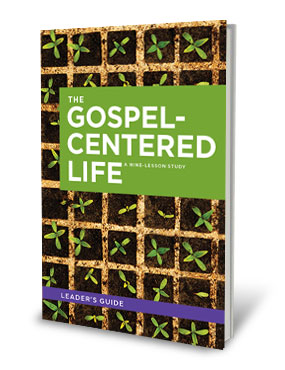 The Gospel-Centered Life Review
Details
• Authors: Bob Thune & Will Walker
• Publisher: New Growth Press
• Description: Nine week small group study
Review
Small group curriculum pervades the landscape in our world, but this study stands far above the crowd. This nine week study is easy to lead, facilitates strong biblical discussion and is dripping with the relevance of the gospel in our every day lives as we pursue growth in Christ. This is not just a theologically rich study, but is also very practical in its real world application of how we pursue gospel-centrality in our every day lives.
• Chapter 1: The Gospel Grid. This chapter builds a framework for interacting with the gospel. It has a very helpful diagram concerning our growing awareness of God’s holiness and our sinfulness. This chapter addresses the gospel as not “just the means of our salvation, but the means of our transformation.” The chapter closes out with an exercise on what motivates us to judge others.
• Chapter 2: Pretending & Performing. This chapter builds on the diagram from chapter one. It discusses specific ways in which we “shrink the cross.” As we loose sight of our sin before a holy God, we begin to pretend that we really aren’t that bad. Conversely, when we loose sight of how Holy God is and our inability to earn His favor apart from Jesus, we begin to perform in an effort to earn His favor.
• Chapter 3: Believing the Gospel. This chapter expands on the previous chapter by helping the reader to understand that they do not need to pretend or perform to be right before God. It is not by our own efforts that we are made right before God – and we need to be reminded of that! “The good news of the gospel is not that God favors us because of who we are, but that he favors us in spite of who we are.” The scripture discussed in this chapter is 2 Peter 1:3-9. It closes out with a very helpful assessment to determine how we view ourselves before God, as orphans or children.
• Chapter 4: Law & Gospel. This chapter explores the relationship between the law and the gospel. In this chapter two terms are introduced, legalism & license, to help illustrate the extremes that are often held by Christians. When we tend toward legalism, we believe that God’s approval is based on our obedience. When we tend toward license, we believe that God has forgiven us and that God’s commands no longer are important. The authors summarize the relationship between the two like this: “the law drives us to the gospel and the gospel frees us to obey the law. Realizing all that God expects of us should drive us in despair to Christ. And once we are united with Christ, the indwelling Holy Spirit causes us to delight in God’s law and gives us power to obey it.” This chapter ends with a helpful exercise to identify if the reader tends toward legalism, license or gospel.
• Chapter 5: Repentance. This chapter develops the concept that “biblical repentance is the norm for gospel-centered living.” This devlopes the idea that we need to be living a lifestyle of repentance because of our proclivity to shrink the cross by our performance and pretending. This chapter is VERY HELPFUL in identifying our motives for repentance. This chapter unpacks what biblical repentance looks like and has a helpful exercise at the end of the chapter to help develop biblical repentance.
• Chapter 6: Heart Idolatry. This chapter is possibly the most impactful in the entire study. It begins to provide concrete ways to apply the material in the study. The driving thrust of this chapter is where is our faith (trust) placed? It pushes the reader to go deeper than just “surface sins,” and mine out the heart level idols that lurk deep within. This chapter is a must read for all Christians – especially those who have been in the faith for many years. It unpacks common heart idols and presses the reader to evaluate his own life carefully.
• Chapter 7: Mission. This chapter discusses how the gospel’s relevance is not just inward and personal, but also is expressed outwardly by people living differently. “If the gospel is renewing you internally, it will be propelling you externally.” This chapter does an excellent job of moving Christians to love, serve, engage and live missional lives without doing it out of duty and drudgery. Missional lives are a “natural overflow of the gospel’s work inside of us.” This chapter ends with a great exercise on examining our hearts when it comes to living on mission. It does not tell you to go and do, but rather helps the reader to identify the heart issues that are preventing them from living on mission with joy.
• Chapter 8: Forgiveness. This chapter expands on how the gospel’s work internally drives us to forgive others biblically. Forgiveness is a problem for many people – even Christians! The remedy for this is the gospel! The more that we understand how costly our own sin is and the lengths to which God went to redeem us, the more we will be moved to forgive others. This chapter presents a balanced view of forgiveness, offering the readers an understanding of the difference between forgiveness and repentance. “Forgiveness involves a heart that cancels the debt but does not lend new money until repentance occurs. Like God, we take the initiative to move toward those who have offended us and we invite them to move toward us in repentance.” This chapter also offers a very helpful homework assignment to help the reader identify where unforgiveness may have crept into their heart.
• Chapter 9: Conflict. The last chapter shows the reader how we engage others in conflict in a healthy way. The study identifies two general types of people: attackers and withdrawers when it comes to conflict and shows how “God did not pour out his wrath on us (attack) or remove his presence from us (withdraw). Instead, he sacrificially moved toward us in the person of Jesus, full of grace and truth.” There is a great matrix that helps the reader determine how he responds and how the gospel responds. Additionally, the end of the chapter offers practical steps for implementing gospel-centered conflict resolution in the real world.
I cannot reiterate enough the culture shift that the authors present in this study. There is no hint moralism or man-centeredness. They masterfully present a theologically rich, God saturated study that is not “heady” or overly “theoretical.” This study provides a great framework for helping believers work out their salvation with fear and trembling by using the gospel as the means for growing in sanctification.
There is a Leader’s Supplement Guide available here.
Believing the Gospel
“At the root of the human condition is a struggle for righteousness and identity. We long for a sense of acceptance, approval, security, and significance-because we were designed by God to find these things in him. But sin has separated us from God and created in us a deep sense of alienation.” Page 33
“Theologically speaking, pretending and performing are just two sophisticated ways of establishing our own righteousness. When we pretend, we are making ourselves out to be better than we are. When we perform, we are trying to please God by what we do.” Page 33
“Our souls must become deeply rooted in the truth of the gospel so that we anchor our righteousness and identity in Jesus and not in ourselves.” Page 34
“We don’t need to do anything to secure God’s love and acceptance; Jesus has secured it for us. When we embrace the gospel in this way, the infinite standard of God’s holiness is no longer fearful or intimidating. It leads to worship, because Jesus has met it for us. Our identity is in him. The good news of the gospel is not that God favors us because of who we are, but that he favors us in spite of who we are.” Page 35
-From The Gospel-Centered Life by World Harvest Mission. Download a free sample of chapter 1 here
The Gospel Propels Us to Live Missionally
“When God’s grace is working on us and in us, it will also work itself out through us. The internal renewal of our minds and hearts creates an external propulsion that moves us out in love and service to others.” page 67
“It is also the answer to your failure to love others, engage the culture, and live missionally. If the gospel is renewing you internally, it will also be propelling you externally.” page 68
“But that sense of ‘should’ has no motivational power. It was law, not gospel. It could show me what I ought to be doing, but it could not change my heart so that I actually wanted to do it.” page 68-69
“Was joyless, mechanical obedience really honoring to Jesus? Did God intend his commands to feel like drudgery? When faced with this dilemma, most people settle for either legalism (obey even though you don’t feel like it) or license (don’t obey at all). But neither of these is gospel! The gospel of God’s grace is the fuel for mission, and when we run low on that fuel, our love and service to others grinds to a halt” page 69
“It means that mission is not duty (something we ‘should do’) but a natural overflow of the gospel’s work inside of us. If you aren’t motivated to love, serve and speak the gospel to people, the answer isn’t ‘just do it,’ the answer is to examine your heart, repent of sin, and discern where your unbelief is short-circuiting the natural outward movement of the gospel. As the gospel renews your heart, it will also renew your desire to move out in faith into relationships and opportunities God places in your path.” page 69
-From The Gospel-Centered Life by World Harvest Mission. Download a free sample of chapter 1 here
Jesus trusts in God’s Sovereign Rule & Reign
Praying according to the will of God and reveals that they were were in eternal, loving community prior to the creation of the world – why would He create? He did not need community – as if we provide Him with anything that He is lacking! He created to display His glory: “Father, I desire that they also, whom you have given me, may be with me where I am, to see my glory that you have given me because you loved me before the foundation of the world.” (John 17:24 ESV).
How did Jesus extend mercy and grace to Judas, whom he knew would betray Him? It is only because He trusted in God’s sovereign control over all things. As we submit and follow God’s plans, it is easier to extend grace because we see a bigger picture, the world is no longer just about us and our plans – it is about God and His plans. And God is in control of those plans. “Then Jesus, knowing all that would happen to him” (John 18:4 ESV)
Jesus accepts God’s plan for His life – do you? ““Put your sword into its sheath; shall I not drink the cup that the Father has given me?”” (John 18:11 ESV)
Caiaphas is pawn in the hands of God. “It was Caiaphas who had advised the Jews that it would be expedient that one man should die for the people.” (John 18:14 ESV)
How does the Creator of all things allow His creation to hit him. Wow! Power under control, meekness is portrayed. Only powered by love, mercy and grace. The mission was ultimate, not his own life. Jesus is the high priest (see Hebrews 4:14-15)! “When he had said these things, one of the officers standing by struck Jesus with his hand, saying, “Is that how you answer the high priest?” Jesus answered him, “If what I said is wrong, bear witness about the wrong; but if what I said is right, why do you strike me?”” (John 18:22–23 ESV)
 The Gospel Centered Life