Tag Archives: Grace

The Grace List

Listen to The Grace List by Tim Kimmel:

The Grace List by Tim Kimmel

The Obedience-based Life vs. The Grace-based Life
You live to impress God vs. You live to trust God
A performance vs. A relationship
A duty vs. A delight
Predictable vs. Fluid
Promotes fear vs. Promotes faith
Creates worry vs. Creates calm
Masked vs. Transparent
Critical Spirit vs. Compassionate Spirit
Sense a lot of guilt vs. Sense a lot of freedom
Inclines you towards pridefulness vs. Inclines you towards humility
Outside-in management vs. Inside-out surrender
For “church” people vs. For everybody
More natural vs. More supernatural
Focuses on being good vs. Focuses on being connected
Lends itself to self-righteousness vs. Lends itself to organic obedience

Or watch online.  See the Grace List on Family Matters Website or download a pdf.

Isaiah is undone in the presence of the Lord

““Holy, holy, holy is the LORD of hosts; the whole earth is full of his glory!”” (Isaiah 6:3 ESV)

Isaiah is undone in the presence of the Lord as he cries out, “Woe is me! For I am lost; for I am a man of unclean lips, and I dwell in the midst of a people of unclean lips; for my eyes have seen the King, the LORD of hosts!”” (Isaiah 6:5 ESV).  The prophet recognizes how short he falls from holiness when he is faced with the holiness of God as he stands in His presence.  But God provides the only remedy for Isaiah’s (and our) position:  grace.  God graciously provides and atones for his sinful inadequacy:  “Then one of the seraphim flew to me, having in his hand a burning coal that he had taken with tongs from the altar. And he touched my mouth and said: “Behold, this has touched your lips; your guilt is taken away, and your sin atoned for.”” (Isaiah 6:6–7 ESV).  Being in the presence of the Almighty and experiencing His grace moves Isaiah to action and service, ““Whom shall I send, and who will go for us?” Then I said, “Here am I! Send me.”” (Isaiah 6:8 ESV).  Isaiah is called to be a prophet to the people.  However, Isaiah’s proclamation will not cause the people to repent and turn to the Lord, rather God had ordained that it would only serve to harden their already darkened and depraved hearts: ““‘Keep on hearing, but do not understand; keep on seeing, but do not perceive.’ Make the heart of this people dull, and their ears heavy, and blind their eyes; lest they see with their eyes, and hear with their ears, and understand with their hearts, and turn and be healed.”” (Isaiah 6:9–10 ESV).  The regenerating faith to respond to God is a gift of His grace, for without it we won’t want Him.

What is the Gospel

What is the Gospel?  “When you were dead in your sins and in the uncircumcision of your sinful nature, God made you alive with Christ. He forgave us all our sins, having canceled the written code, with its regulations, that was against us and that stood opposed to us; he took it away, nailing it to the cross.” (Colossians 2:13–14 NIV)

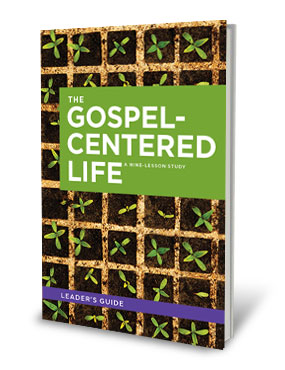
The Gospel-Centered Life Review

The Gospel-Centered Life Review

Details
• Authors:  Bob Thune & Will Walker
• Publisher:  New Growth Press
• Description:  Nine week small group study

Review
Small group curriculum pervades the landscape in our world, but this study stands far above the crowd.  This nine week study is easy to lead, facilitates strong biblical discussion and is dripping with the relevance of the gospel in our every day lives as we pursue growth in Christ.  This is not just a theologically rich study, but is also very practical in its real world application of how we pursue gospel-centrality in our every day lives.
Chapter 1:  The Gospel Grid.  This chapter builds a framework for interacting with the gospel.  It has a very helpful diagram concerning our growing awareness of God’s holiness and our sinfulness.  This chapter addresses the gospel as not “just the means of our salvation, but the means of our transformation.”  The chapter closes out with an exercise on what motivates us to judge others.
Chapter 2:  Pretending & Performing.  This chapter builds on the diagram from chapter one.  It discusses specific ways in which we “shrink the cross.”  As we loose sight of our sin before a holy God, we begin to pretend that we really aren’t that bad.  Conversely, when we loose sight of how Holy God is and our inability to earn His favor apart from Jesus, we begin to perform in an effort to earn His favor.
Chapter 3:  Believing the Gospel.  This chapter expands on the previous chapter by helping the reader to understand that they do not need to pretend or perform to be right before God.  It is not by our own efforts that we are made right before God – and we need to be reminded of that!  “The good news of the gospel is not that God favors us because of who we are, but that he favors us in spite of who we are.”  The scripture discussed in this chapter is 2 Peter 1:3-9.  It closes out with a very helpful assessment to determine how we view ourselves before God, as orphans or children.
Chapter 4:  Law & Gospel.  This chapter explores the relationship between the law and the gospel.  In this chapter two terms are introduced, legalism & license, to help illustrate the extremes that are often held by Christians.  When we tend toward legalism, we believe that God’s approval is based on our obedience.  When we tend toward license, we believe that God has forgiven us and that God’s commands no longer are important.  The authors summarize the relationship between the two like this:  “the law drives us to the gospel and the gospel frees us to obey the law.  Realizing all that God expects of us should drive us in despair to Christ.  And once we are united with Christ, the indwelling Holy Spirit causes us to delight in God’s law and gives us power to obey it.”  This chapter ends with a helpful exercise to identify if the reader tends toward legalism, license or gospel.
Chapter 5:  Repentance.  This chapter develops the concept that “biblical repentance is the norm for gospel-centered living.”  This devlopes the idea that we need to be living a lifestyle of repentance because of our proclivity to shrink the cross by our performance and pretending.  This chapter is VERY HELPFUL in identifying our motives for repentance.  This chapter unpacks what biblical repentance looks like and has a helpful exercise at the end of the chapter to help develop biblical repentance.
Chapter 6:  Heart Idolatry.  This chapter is possibly the most impactful in the entire study.  It begins to provide concrete ways to apply the material in the study.  The driving thrust of this chapter is where is our faith (trust) placed?  It pushes the reader to go deeper than just “surface sins,” and mine out the heart level idols that lurk deep within.  This chapter is a must read for all Christians – especially those who have been in the faith for many years.  It unpacks common heart idols and presses the reader to evaluate his own life carefully.
Chapter 7:  Mission.  This chapter discusses how the gospel’s relevance is not just inward and personal, but also is expressed outwardly by people living differently.  “If the gospel is renewing you internally, it will be propelling you externally.”   This chapter does an excellent job of moving Christians to love, serve, engage and live missional lives without doing it out of duty and drudgery.  Missional lives are a “natural overflow of the gospel’s work inside of us.”  This chapter ends with a great exercise on examining our hearts when it comes to living on mission.  It does not tell you to go and do, but rather helps the reader to identify the heart issues that are preventing them from living on mission with joy.
Chapter 8:  Forgiveness.  This chapter expands on how the gospel’s work internally drives us to forgive others biblically.  Forgiveness is a problem for many people – even Christians!  The remedy for this is the gospel!  The more that we understand how costly our own sin is and the lengths to which God went to redeem us, the more we will be moved to forgive others.  This chapter presents a balanced view of forgiveness, offering the readers an understanding of the difference between forgiveness and repentance.  “Forgiveness involves a heart that cancels the debt but does not lend new money until repentance occurs.  Like God, we take the initiative to move toward those who have offended us and we invite them to move toward us in repentance.”  This chapter also offers a very helpful homework assignment to help the reader identify where unforgiveness may have crept into their heart.
Chapter 9:  Conflict.  The last chapter shows the reader how we engage others in conflict in a healthy way.  The study identifies two general types of people:  attackers and withdrawers when it comes to conflict and shows how “God did not pour out his wrath on us (attack) or remove his presence from us (withdraw).  Instead, he sacrificially moved toward us in the person of Jesus, full of grace and truth.”  There is a great matrix that helps the reader determine how he responds and how the gospel responds.  Additionally, the end of the chapter offers practical steps for implementing gospel-centered conflict resolution in the real world.

I cannot reiterate enough the culture shift that the authors present in this study.  There is no hint moralism or man-centeredness.  They masterfully present a theologically rich, God saturated study that is not “heady” or overly “theoretical.”  This study provides a great framework for helping believers work out their salvation with fear and trembling by using the gospel as the means for growing in sanctification.

There is a Leader’s Supplement Guide available here.

God Centered Perspective Overview

This is the third post in this series.  The last post is here.

GOD CENTERED PERSPECTIVE
God centered theology sounds like an oxymoron!  Someone might interject and say, “of course we are God centered, we’re a church!”  Unfortunately, God is often the most assumed topic in our churches and we talk very little about Him.  Sometimes, we begin to view the bible as a self help guide designed to fix us rather than it being the revelation of God about who He is and His plans for His glory in His world.  We migrate to the bible being a field guide for how to make our lives “work,” which ultimately breaks down when life does not “work” according to our plan – which it never does1.  There is a big difference between these two points of view:  one puts us on center stage, the other places God on center stage2.  It is risky business when we make ourselves the focus because we rob God of glory and take that which is not ours to own; we become glory thieves.  Being at cross purposes with the God of the universe should strike a chord of fear in us because God says “my glory I will not give to another.”3  We need to be constantly asking ourselves, “who gets the glory?”
We must intentionally focus more on God and far less on us and what we must do for God (as if He needs anything from us4).  We need to be persistently reminded of the sovereign majesty of our Creator because we easily forget; this seems to be the pattern of humanity’s response to God in the scriptures.5  When this happens, we make moralism and the practical application of scripture our primary pursuits, brushing over the deep truths of scripture that provide the fuel for applying them to our lives.  Practical application is good and necessary, but when we spend the majority of our time on how to apply the scriptures and very little time on the God of the scriptures, we rob our people of the very Fuel that it takes to apply the scriptures to their lives!  The irony in this is that the more emphasis that we place on what people should be doing, the less people actually do the very things that they are being told to do!  Their lives aren’t truly transformed by the gospel of grace, they don’t live missionally, their souls are dry with no affection for God nor do they have any significant influence on the world around them.  This is because they are depending upon themselves to see their lives changed and obey God.  Instead, we need to be captivated with God’s goodness, love, grace, mercy and the wrath that He has rescued us from – these are the things that produce true spiritual transformation.  In a God centered culture, it is understood that proximity to Christ6 is what changes us, not our own efforts.  As we focus more on God’s character and nature we move from external behavior modification to heart level transformation and see spiritual sustainability established in the lives of Christians.
Everyone has a theology – a believe about God – it is just that the theology held by many Christians is not biblical, historically accurate nor orthodox.  For many, they are far more influenced by pop culture than by orthodox doctrine or theology.  We must have a steady diet of Christ centered, God exalting, biblical, orthodox teaching that forms an accurate worldview through which we view God, others, the world, pain & suffering and our place in this world.  Most Christians know what they should do – how they should act & feel – but fail to consistently pursue these things because their theology is man centered.  Our theological framework provides the foundation for everything that we believe, think, feel and ultimately do in life.  A strong God saturated theological framework answers the question of “why we live our lives the way the bible tells us to,” and provides us with the fuel to live our lives that way.   We need to develop a taste for doctrine, theology and biblical Christianity so that we are able to face many of life’s greatest challenges.  Theology and doctrine are not primarily academic or intellectual pursuits, but are the vehicle for us to know God more deeply and passionately pursue Him more fully.  We need good, solid God honoring doctrine woven in to the fabric of the culture of our churches in order to foster authentic pursuit of Christ.  This must be intentional or it will naturally devolve into man centeredness.  There are many ways to accomplish this, but whatever the method, it must be infused in the culture of the church by being intentional about what is taught and how it is taught.

NOTES:
1“For I consider that the sufferings of this present time are not worth comparing with the glory that is to be revealed to us. For the creation waits with eager longing for the revealing of the sons of God. For the creation was subjected to futility, not willingly, but because of him who subjected it, in hope that the creation itself will be set free from its bondage to corruption and obtain the freedom of the glory of the children of God. For we know that the whole creation has been groaning together in the pains of childbirth until now. And not only the creation, but we ourselves, who have the first fruits of the Spirit, groan inwardly as we wait eagerly for adoption as sons, the redemption of our bodies. For in this hope we were saved. Now hope that is seen is not hope. For who hopes for what he sees? But if we hope for what we do not see, we wait for it with patience.” (Romans 8:18–25 ESV)
2When we say God centered versus man centered, what is meant is who do we focus on primarily in our study, teaching and practice.  In a God centered culture, the bulk of time and teaching is spent expounding on who God is and what He has done for His people.  In a man centered culture, the bulk of time and teaching is spent on who we are and what we should be doing for God.  This may sound subtle, but its implications are profound; one places God as the central cause of transformation and the other places transformation on our shoulders to pull off on our self disciplined efforts.
3“I am the LORD; that is my name; my glory I give to no other, nor my praise to carved idols.” (Isaiah 42:8 ESV); “For my own sake, for my own sake, I do it, for how should my name be profaned? My glory I will not give to another.” (Isaiah 48:11 ESV)
4“nor is he served by human hands, as though he needed anything, since he himself gives to all mankind life and breath and everything.” (Acts 17:25 ESV)
5The Old Testament is filled with narratives of God’s people regularly forgetting God and pursuing their own way, they are shifting from God centered to man centered and the consequences are always catastrophic.  The pattern we see repeated in the New Testament, especially by Paul in the epistles, is a systematic approach to reminding the churches that are being addressed of their inability, depravity, and place in the universe and God’s greatness.  There is a constant rebuilding of who God is and who they are before any application is mentioned.  We see this especially in Romans when Paul spends the first eleven chapters discussing the richest and deepest truths of our faith before he ever begins to address what our response is in chapter twelve.  The first three chapters of Ephesians is a systematic unpacking of the gospel and God’s grace towards those who believe before any application is mentioned in chapter four.  Philippians and Colossians both intertwine the gospel and the grace of God with how to live out the gospel in practical ways.  The entire letter of Galatians is about shifting from man centered faith (law) to God centered faith (grace).  Apparently, we need to be reminded on where our strength and affections lie.
6“Abide in me, and I in you. As the branch cannot bear fruit by itself, unless it abides in the vine, neither can you, unless you abide in me. I am the vine; you are the branches. Whoever abides in me and I in him, he it is that bears much fruit, for apart from me you can do nothing.” (John 15:4–5 ESV); Jesus’ proclamation, regarding believers being the salt of the earth and the light of the world in Matthew 5:13-16 is a direct result of a person coming before God as being spiritually bankrupt (Matthew 5:3); “When they saw the courage of Peter and John and realized that they were unschooled, ordinary men, they were astonished and they took note that these men had been with Jesus.” (Acts 4:13 NIV)

download PDF
Previous Section:  Background Assumptions
Next Section:  God Centered Perspective: Position

Prayers & Principles Introduction

This post is the first of several (number still undefined) posts that will help define what a God-centered culture looks like and some of the key prayers and principles required to create a God-centered culture.

Purpose:  To build a culture that is God glorifying, Christ centered, gospel (grace) saturated and redeeming to those that are a part of it; a culture that is marked by people in authentic pursuit of Jesus to know Him more deeply and serve Him more fully; people that are intentional about having their heart’s affections stirred up for the Lord.  The fabric of this culture has some common threads that are woven in to it and help to create a prism through which we see life and engage others as we chase after Christ.

Introduction:  The majority of the modern evangelical experience in the western world today is failing in its discipleship efforts and is having little influence on the world that it professes to reach and influence.  In the west, we regularly gather large crowds in church buildings on Sundays, but there is little evidence in the lives of the attenders that they are different than their non-professing friends and neighbors.  Why is this?  There seem to be some common themes in American evangelicalism that are not biblical, orthodox or have been part of the church culture historically.  The modern church tends to emphasize morality over the gospel, external accomplishments & numerical growth that are easily measured over depth, practicality over doctrine, and a formula based approach to faith rather than pursuing an abiding relationship with the Creator.
On any given Sunday in the western church you will hear messages that are grounded in what we need to do and are devoid of the deep doctrines of our faith.  The messaging is almost always topical, very pragmatic, and results/application oriented.  Titles like “5 ways to reduce debt,” “3 ways to serve your wife,” “4 ways to be sexually pure,” or “how to overcome pornography” are the common topics that are covered.  These churches tend to be highly entrepreneurial, very organized, gather large crowds, have very impressive services and teach people bible based “formulas” for making life work (i.e. marriages, child rearing, finances, etc).  The problem with this approach is that it produces a man-centered culture that is theologically weak, values morality over grace, likes to measure spirituality by accomplishments, have no real understanding of who God is, are ill equipped to handle life’s difficulties when things don’t go as planned according to the formulas and provides little comfort to those who don’t seem the “measure up.”  These churches tend to produce people who have an appearance of godliness, but deny its power (2 Timothy 3:5).  These tend to produce morally clean people who are never spiritually transformed by the gospel because the gospel is not lived out on an ongoing basis.
Is everything bad in American Evangelicalism?  Absolutely not!  We have a rich heritage of God doing miraculous things in His church in America.  But, it is time to ask some difficult questions with honesty and biblical sobriety – and perhaps we will experience a spiritual revolution!  Perhaps, God will be gracious to us and will reconstruct God-centered cultures that are glorifying to him, biblically accurate, doctrinally strong and redeeming to those who experience them.  If someone has been in the church very long they have undoubtedly embraced much of this teaching as the core of their faith and significant deconstruction is required before a biblical, God-centered theological system can be reconstructed.  The goal of these posts is to provide some of the key prayers and principles required to deconstruct our false religious paradigms and reconstruct a vibrant God-glorifying, gospel saturated culture.

download PDF
Precious Section:  Outline
Next Section:  Background Assumptions

Believing the Gospel

“At the root of the human condition is a struggle for righteousness and identity.  We long for a sense of acceptance, approval, security, and significance-because we were designed by God to find these things in him.  But sin has separated us from God and created in us a deep sense of alienation.” Page 33

“Theologically speaking, pretending and performing are just two sophisticated ways of establishing our own righteousness.  When we pretend, we are making ourselves out to be better than we are.  When we perform, we are trying to please God by what we do.”  Page 33

“Our souls must become deeply rooted in the truth of the gospel so that we anchor our righteousness and identity in Jesus and not in ourselves.”  Page 34

“We don’t need to do anything to secure God’s love and acceptance; Jesus has secured it for us.  When we embrace the gospel in this way, the infinite standard of God’s holiness is no longer fearful or intimidating.  It leads to worship, because Jesus has met it for us.  Our identity is in him.  The good news of the gospel is not that God favors us because of who we are, but that he favors us in spite of who we are.”  Page 35

-From The Gospel-Centered Life by World Harvest Mission.  Download a free sample of chapter 1 here

Jesus trusts in God’s Sovereign Rule & Reign

Praying according to the will of God and reveals that they were were in eternal, loving community prior to the creation of the world – why would He create?  He did not need community – as if we provide Him with anything that He is lacking!  He created to display His glory:  “Father, I desire that they also, whom you have given me, may be with me where I am, to see my glory that you have given me because you loved me before the foundation of the world.” (John 17:24 ESV).

How did Jesus extend mercy and grace to Judas, whom he knew would betray Him?  It is only because He trusted in God’s sovereign control over all things.  As we submit and follow God’s plans, it is easier to extend grace because we see a bigger picture, the world is no longer just about us and our plans – it is about God and His plans.  And God is in control of those plans.  “Then Jesus, knowing all that would happen to him” (John 18:4 ESV)

Jesus accepts God’s plan for His life – do you?  ““Put your sword into its sheath; shall I not drink the cup that the Father has given me?”” (John 18:11 ESV)

Caiaphas is pawn in the hands of God.  “It was Caiaphas who had advised the Jews that it would be expedient that one man should die for the people.” (John 18:14 ESV)

How does the Creator of all things allow His creation to hit him.  Wow!  Power under control, meekness is portrayed.  Only powered by love, mercy and grace.  The mission was ultimate, not his own life.  Jesus is the high priest (see Hebrews 4:14-15)!  “When he had said these things, one of the officers standing by struck Jesus with his hand, saying, “Is that how you answer the high priest?” Jesus answered him, “If what I said is wrong, bear witness about the wrong; but if what I said is right, why do you strike me?”” (John 18:22–23 ESV)

Christ Formed in You

“The Heart Is the Organ of Worship Because the heart is so active with its passions, affections, and desires, it is the organ with which we worship. Deuteronomy 11:16 warns, “Take care lest your heart be deceived, and you turn aside and serve other gods and worship them.” Jesus says, “This people honors me with their lips, but their heart is far from me; in vain do they worship me, teaching as doctrines the commandments of men” (Matt. 15:8–9).” (location 1307 Kindle edition)

“We need more than moral reformation and behavioral modification. We need inner cleansing, spiritual renewal, and new hearts, and God does that for us!”  (location 1522 Kindle edition)

Christ Formed in You by Brian Hedges

The Gospel Grid

“The apostle Peter teaches that a lack of ongoing transformation in our lives comes from forgetting what God has done for us in the gospel (2 Peter 1:3-9). If we are to grow into maturity in Christ, we must deepen and enlarge our understanding of the gospel as God’s appointed means for personal and communal transformation.”

[The gospel] “is not just the means of our salvation, but the means of our transformation.  It is not simply deliverance from sin’s penalty, but release from sins power.  The gospel is what makes us right with God (justification) and it is also what frees us to delight in God (sanctification).  The gospel changes everything!”

“The more I grow in my Christian life, the more I grow in my awareness of God’s holiness and of my flesh and sinfulness.” … “But my awareness of both is growing.  I am increasingly seeing God as he actually is (Isaiah 55:8-9) and myself as I actually am (Jeremiah 7:9-10).” … “As my understanding of my sin and of God’s holiness grows, something else grows:  my appreciation and love for Jesus.” … “The cross looms larger and more central in my life as I rejoice in the Savior who died upon it.”

“Because of the indwelling sin that remains in me, I have an ongoing tendency to minimize the gospel or ‘shrink the cross.’ This happens when I either (a) minimize God’s perfect holiness, thinking of him as something less than his Word declares him to be, or (b) elevate my own righteousness, thinking of myself as better than I actually am.  The cross becomes smaller and Christ’s importance in my life is diminished.

We need to identify, admit, and feel the depth of our brokenness and sinfulness.

“Our hope is not in our own goodness, nor in the vain expectation that God will compromise his standards and ‘grade on a curve.’  Rather, we rest in Jesus as our perfect Redeemer – the One who is ‘our righteousness, holiness and redemption’ (1 Corinthians 1:30).”

-Exerted from The Gospel-Centered Life by World Harvest Mission, pages 8-10.  Download a sample of chapter 1 here